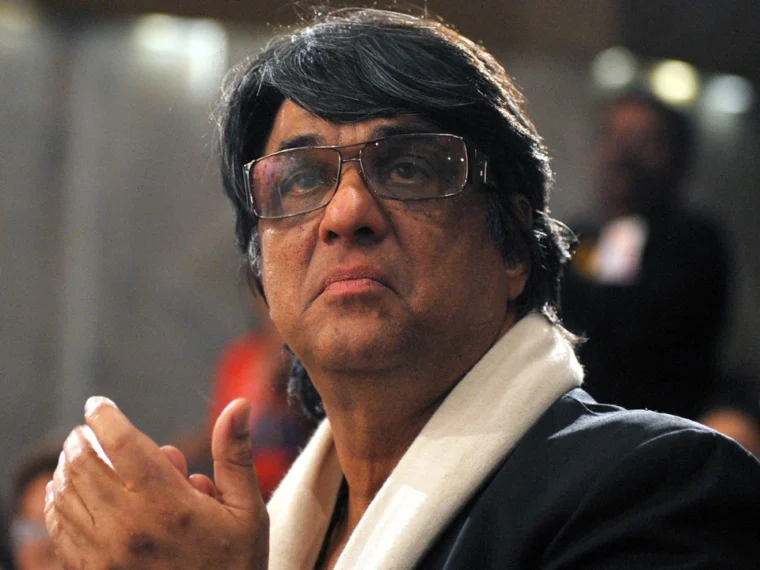
Mukesh Khanna best dialogue: In Hindi cinema, there are a few actors whose identity is shaped not just by their performances but by the sheer power of their voice and dialogue delivery. Mukesh Khanna stands firmly in that league. His commanding baritone and intense expressions often remind audiences of legendary performers like Raj Kumar and Dilip Kumar. While Raj Kumar was known for his royal authority in speech and Dilip Kumar for emotional depth, Mukesh Khanna carved his own space with firmness, patriotism, and unshakable conviction in his dialogues.
Over the years, Mukesh Khanna delivered several memorable performances, especially in films like Tahalka, Saugandh, and Betaaj Badshah. His dialogues from these films continue to resonate with audiences who admire strong, value-driven characters.
One of his most powerful dialogues from Tahalka goes:
“Mana kismat ne hara diya hai dost, par itne toh gunahgaar nahin hum… mare ek sipahi ki maut, kya iske bhi haqdaar nahin hum.”
This dialogue reflects the pain and pride of a soldier. It speaks of defeat by fate but not by honor. The line captures patriotism, self-respect, and the emotional turmoil of a warrior who believes he deserves dignity even in death. Mukesh Khanna’s heavy and steady voice elevated this dialogue to an unforgettable cinematic moment.
Another popular line from Tahalka is:
“Badalne wali hum cheez nahin… are hum mard hain, koi kameez nahin.”
This dialogue became widely quoted for its boldness. It emphasizes staying true to one’s principles and identity. Delivered with confidence and attitude, it reflects a personality that refuses to bend according to circumstances.
From the film Saugandh, one of his most striking dialogues is:
“Sarang ka sar sooli par chadh sakta hai, barood ki tarah phat sakta hai, kat sakta hai… magar jhuk nahin sakta.”
This line highlights unwavering self-respect. It portrays a character who may face death or destruction but will never bow down. Such dialogues defined Mukesh Khanna’s on-screen persona — fearless, dignified, and morally strong.
In Betaaj Badshah, he delivered another thought-provoking line:
“Jang mein pyaar nahin hota… lekin pyaar mein jang hua karti hai.”
This dialogue beautifully expresses the idea that while love and war are often seen as opposites, love itself can be a battlefield filled with struggles and sacrifices. It shows the emotional depth in his characters beyond physical strength.
Another impactful line from Betaaj Badshah states:
“Majboori mein daya ki bheekh maangi jaati hai… koi shart nahin rakhi jaati.”
This dialogue reflects the harsh realities of life. When someone is truly helpless, they do not bargain or set conditions — they simply seek mercy. It shows a philosophical side to his performances, highlighting emotional vulnerability within strength.
One more emotionally intense dialogue from Tahalka reads:
“Jisne dil pe zakhm khaya ho, woh is zakhm se kya ghabraega… piye ho jisne khoon ke aansu, kya woh is khoon se mar jayega.”
This line symbolizes resilience. It portrays a person who has endured deep emotional pain and therefore fears nothing. Mukesh Khanna’s delivery gave this dialogue a powerful rhythm and emotional gravity that left a lasting impression.
Another meaningful dialogue from the same film says:
“Apne matlab ke vaaste humne aasmanon se kuch nahin maanga… humne gulshan ki khair maangi hai, koi takht-o-taaj nahin maanga.”
This line reflects humility and selflessness. Instead of asking for power or a throne, the character seeks well-being and peace. It underlines integrity and noble intentions — qualities often associated with Mukesh Khanna’s roles.
What makes Mukesh Khanna special is that he didn’t merely recite dialogues; he embodied them. His pauses, voice modulation, and intense eye expressions gave weight to every word. In an era where dialogue delivery was a true art form, he maintained a style that was authoritative yet emotionally grounded.
Even today, when cinematic trends have shifted toward subtle realism, Mukesh Khanna’s powerful dialogues continue to be remembered. They represent a time when strong words, moral conviction, and commanding presence defined heroism on screen.
Mukesh Khanna is not just an actor; he is a symbol of impactful dialogue delivery in Bollywood. His memorable lines remain timeless examples of how voice, conviction, and emotion can transform simple words into cinematic history.